
Actuated Ball Valve vs Butterfly Valve: A Selection Checklist
Compare actuated ball and butterfly valves by duty, materials, connections and actuator requirements. Use the checklist to prepare your valve enquiry.
Published by SHE · 9 October 2026 · Valve selection guide
Choose an actuated ball valve or butterfly valve by checking the process duty, valve construction, installation and actuator together. Both can provide rotary valve automation, but a similar pipe size or actuator appearance does not make two assemblies interchangeable. Start with what the valve must do, then compare documented configurations.
This checklist helps equipment buyers and engineers prepare a useful comparison. It covers isolation, selected control duties, materials, connections and the information needed for an enquiry. It does not assign a universal pressure, temperature or leakage rating to either valve family.
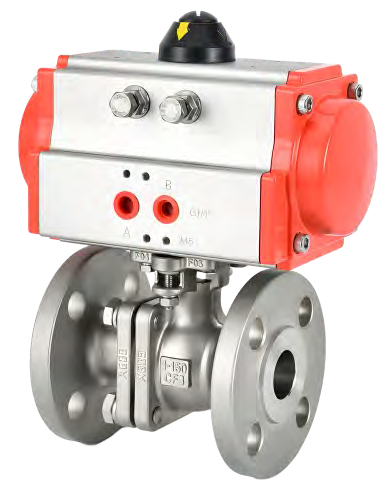

1. Understand the closing element
A ball valve rotates a ball containing a flow passage. In a two-way isolation arrangement, rotation aligns the passage with the pipeline or moves it towards the closed position. The bore, seats and body construction affect how the selected valve fits its duty.
A butterfly valve rotates a disc within the flow passage. Seat construction and offset geometry vary between designs. A resilient-seated butterfly valve and a triple-offset butterfly valve therefore need separate reviews rather than one shared set of performance assumptions.
The useful question is not which name sounds more robust. Ask whether the actual flow path, seating arrangement, materials and documented operating limits satisfy the intended service.
2. Compare the duty before comparing prices
| Decision point | Ball-valve check | Butterfly-valve check |
|---|---|---|
| Flow path | Confirm the bore, port arrangement and required flow coefficient. | Confirm disc geometry, clearances and the applicable flow data. |
| Isolation | Specify seat construction, pressure direction and required shut-off performance. | Specify seat type, permitted pressure direction and closing requirements. |
| Position control | Request the characteristic of the actual port or trim. | Request the characteristic and useful control range of the actual disc and seat design. |
| Connection | Check flange or thread standard, face-to-face length and maintenance access. | Check wafer or other body arrangement, mating flanges and disc clearance. |
| Actuator load | Obtain starting, running and seating loads for the stated conditions. | Obtain the relevant full-travel load and seating requirements. |
| Materials | Review body, ball, stem, seats and seals. | Review body, disc, shaft, seat and seals. |
| Complete cost | Include actuation, interface parts, accessories and documentation. | Include actuation, interface parts, accessories and documentation. |
Use the same operating conditions and document requirements when requesting alternatives. A lower component price is not a complete comparison if the other option includes a positioner, feedback, mounting parts or inspection records that the first quotation omits.
3. Separate isolation from modulating control
For isolation, state how often the valve operates, how quickly it must move and what closed-position performance is required. Include the pressure difference across the closed valve and any expected changes between normal operation and start-up.
For modulating control, provide minimum, normal and maximum flow together with inlet and outlet pressures. Request the flow coefficient and characteristic for the proposed construction. Neither a generic ball-valve label nor a butterfly-valve label establishes suitability for every control task.
A pneumatic V-port ball valve is a separate product arrangement to discuss when rotary regulation is needed. Adding a positioner to an existing isolation assembly does not by itself confirm that the valve, actuator and duty are appropriate. Review on-off versus modulating control before specifying the package.
4. Check materials, pressure and temperature together
Record the medium, concentration, contamination and cleaning agents. State normal conditions as well as credible maximum and minimum temperatures and pressures. A material name alone is not a compatibility assessment, and a nominal pressure designation does not replace the selected valve’s pressure-temperature documentation.
Review all relevant components, including seats and seals. A body material that suits the process does not prove that the sealing arrangement, actuator components or accessories have the same limits. Where the customer requires a particular approval, identify that requirement and request evidence for the proposed configuration.
For solids, deposits or viscous service, describe what is present and how the system is cleaned or flushed. Ask how those conditions affect the closing element and required operating load. Do not assume that one valve family handles every contaminated stream.
5. Confirm connection dimensions and service access
Send the complete connection designation, mating flange information and available installation length. Nominal pipe size and pressure class are insufficient to establish dimensional compatibility. Existing equipment photographs are helpful, but a mounting or piping drawing provides a better basis for review.
For a wafer butterfly assembly, check the disc’s operating clearance against the adjacent pipework and components. For a flanged ball valve, confirm the selected flange standard and face-to-face length. For either arrangement, allow access to the actuator, electrical or pneumatic connections and any specified manual operation.
Consider maintenance as part of selection. Identify the available removal space, whether adjacent pipework can be disturbed and which replacement parts must be accessible. Request configuration-specific installation and maintenance instructions before work begins.
6. Select electric or pneumatic actuation as a separate decision
Either valve family can be considered with an appropriate electric or pneumatic drive. The correct choice depends on available utilities, required motion, operating frequency, control signals and the response required when supply or command is lost.
For pneumatic equipment, supply the minimum air pressure available at the actuator while the valve moves. Define double-acting or spring-return requirements through the intended control circuit. For electric equipment, state voltage, phase, frequency, opening and closing times, starts or movements per hour, and feedback requirements.
Do not infer failure position from the energy source or product photograph. Specify the required outcome after loss of air, electrical power and control signal separately. Compare the electric and pneumatic actuation options alongside the actual valve duty.
7. Match the load, interface and control accessories
Obtain the valve’s operating load for the proposed medium, pressure, temperature and seating arrangement. Check the actuator output across the relevant movements and at the available supply conditions. Agree any sizing allowance and confirm the valve’s allowable loads; choosing the largest actuator is not a substitute for matching the assembly.
Check the shaft or stem connection, mounting pattern, coupling and alignment. Then define the controls: a solenoid for the intended pneumatic circuit, end-position feedback, a positioner where suitable, and local operation if required. Each accessory must match the electrical, pneumatic and environmental requirements.
Use the valve actuator sizing checklist to collect the inputs. Keep the actuator, valve, mounting components and accessories on the same configuration list so that a change to one item triggers a review of the others.
8. Prepare a comparable enquiry
Send the following information when asking SHE to review ball-valve and butterfly-valve alternatives. Mark missing values as unknown so they can be clarified instead of replaced with assumptions.
- Process: medium, concentration, solids and cleaning regime.
- Operating envelope: normal and maximum pressure, differential pressure and temperature range.
- Valve duty: isolation or regulation, flow data where needed, operating frequency and shut-off requirement.
- Installation: size, connection standard, face-to-face length, drawings and available space.
- Actuation: supply, operating time, control signal, feedback and required failure response.
- Purchase scope: quantity, valve-only or complete assembly, drawings, testing and document requirements.
Browse the pneumatic ball valves, pneumatic butterfly valves and electric butterfly valves. Compare specific configurations rather than treating each category as one rating.
Send Your Valve Selection Requirements
Questions buyers commonly need to resolve
Can the same actuator be used on both valve types?
Only after checking load, travel, mounting, drive connection and controls. A matching appearance or flange designation does not prove that a complete actuator is interchangeable.
Does a valve type guarantee a leakage class or approval?
No. Request the applicable performance and documentation for the selected valve, materials and configuration. State the required test or approval in the enquiry.
Is a product photograph enough to select an assembly?
No. Photographs help identify the arrangement, but final selection needs the relevant datasheet, dimensions, operating conditions and control documentation.
General engineering background: Emerson Control Valve Handbook, Isolation Valves. External reference material describes general valve constructions and other manufacturers’ equipment; it does not establish SHE product ratings.